It was a Near Thing
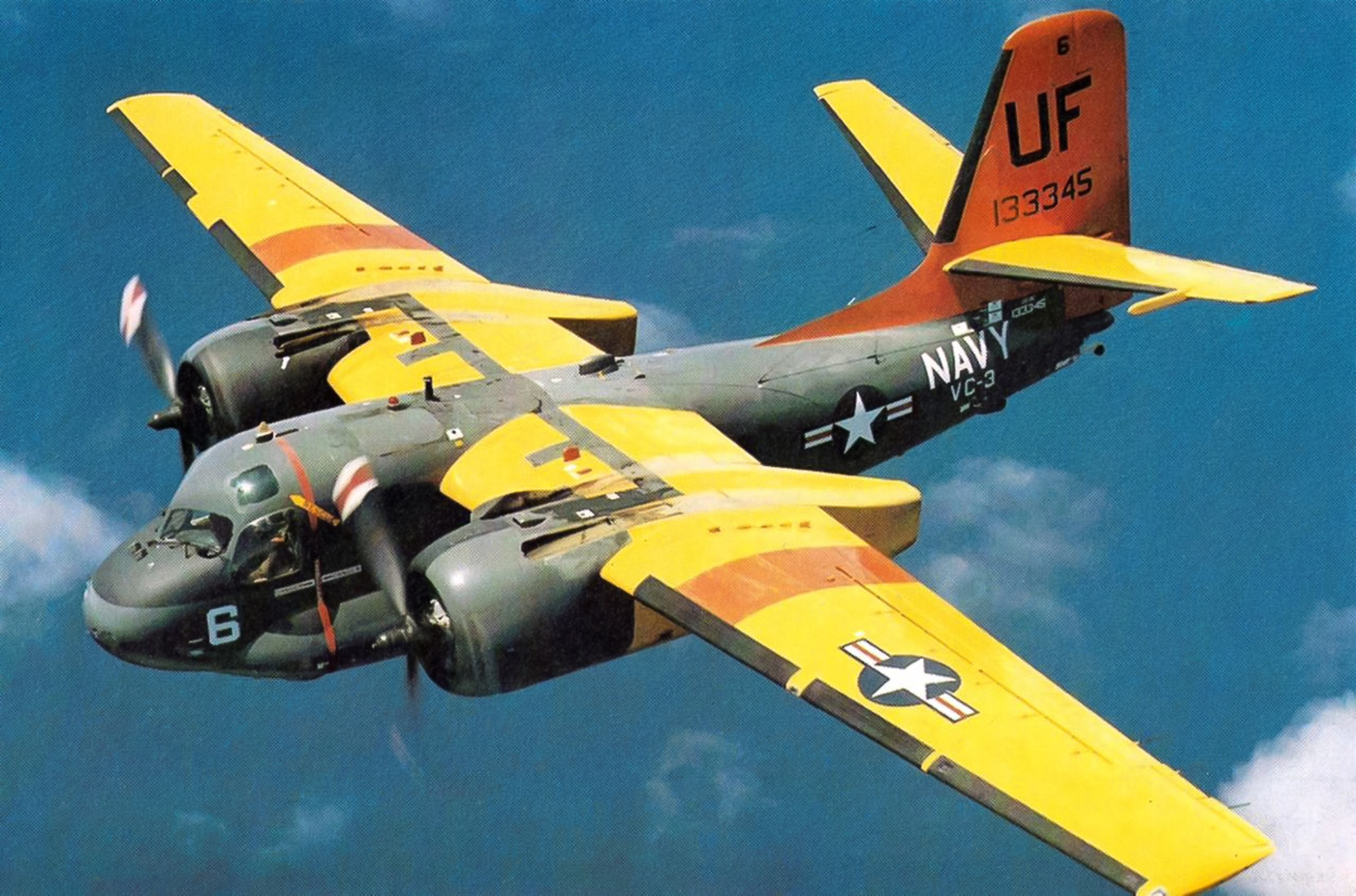
Grumman S-2 Tracker converted from antisubmarine missions to target towing
First, a little background. The squadron had a CO for a time that was a complete douchebag and squadron performance, morale and safety had suffered as a result. Now it happened that one of our pilots over rotated on a night take off and hooked the arresting cable by accident going against the grain. Make no mistake about it, this was a massive mistake. There is no give in the mechanism at the departure end of the runway and the hook is not designed to be used in the raised position. The result was that the aircraft frame was bent and thereafter it required full left trim for straight and level flight. It could fly in single engine mode using only the right engine but not using only the left. Reading between the lines I assume that the CO, who was a horrible sycophant, did not want a blemish from his tour as CO. So he did not allow this event to be reported with the risk of it being classified as an accident (i.e. loss of aircraft). Going forward he was not put at risk because being a jet pilot he did not have to fly that pig.
I was about a month away from leaving the Navy and had already suffered the trauma of a P-2 crash into the ocean. Just about every week there was some kind of incident but I really didn’t want any further drama before I left the Navy.
So there I was, on a firing range sweep** at very low altitude when I noticed the starboard oil pressure was zero. All other indicators were fine. I slammed the gauge with my fist because, due to the salty tropical environment, it’s not uncommon to have gauge problems. The needle didn’t budge. Having just made a low pass over a fishing boat we were at 50 feet and needed to climb immediately. I advanced the prop rpm levers in preparation for adding max throttle and the starboard engine oversped catastrophically. After confirming with my copilot that it was the starboard engine that needed to be shut down, I engaged the emergency prop feathering to stop the overspeed and then shut down the engine. Having lost the wrong engine we could not climb and were skimming the surface in ground effect. We got really really low. I mean really low. There was smoke coming from the engine and if it caught fire our only recourse would be to ditch into the ocean. My workload was through the roof. I thank my constant Navy pilot emergency training to avoid degraded decision making (i.e. tach-psyche effects) during such a fast paced and chaotic event. Later my copilot told me that the barometric altimeter read below zero for awhile. It’s known that if you fly low enough the venturi effect can draw down the altimeter reading below sea level.
OK, the engine oversped because the prop rpm governing servo uses engine oil to maintain the rpm setting. As soon as I touched the prop lever, the oil trapped in the servo dome was released thus letting the prop blades go to zero pitch. There was no NATOPs procedure for this situation.
It was a nice clear day with little aircraft activity and we were about 15 miles straight up wind. I had the copilot handle the radios while I wrestled the aircraft. We declared an emergency and requested an immediate landing from the wrong (upwind) direction. The tower replied “roger take a right downwind” meaning get in the landing pattern. No dammit! I cannot even make but the shallowest of turns without increasing the risk of plowing into the ocean. Getting in the landing pattern would require climbing over the small hills on the downwind side of things and we cannot climb and are abusing our single good engine at maximum power. We never received a reply acknowledging our situation. Whoever was manning the tower was probably new at his job and I did not have the time to argue. So I got on the radio using the international distress frequency (which means every airliner and facility within a 100 miles can hear me) and broadcast that we were landing downwind at Rosy Roads WITHOUT CLEARANCE and to stay the heck out of the way. There was an added benefit in that the radio in the ready room was always manned and if we crashed at sea the squadron would have the info they needed to get a helo airborne to come pick us up. You need to know that landing without clearance is forbidden under any circumstances and can result in serious consequences.
I briefed the copilot that we would hold gear and flaps until over the runway and that he could lower the hook once feet dry. Out of extreme peevishness I planned to take the arresting gear which would drag out a bunch of anchor chain onto the runway thus shutting the runway down for awhile. Being lower than the trees fringing the shoreline I aimed for a gap between the trees slightly offline from the runway itself. I advised the tower that they would not be able to see me until I popped into visual range near the end of the runway. They don’t grant clearance to land until they have you in sight but since I hadn’t received clearance for an upwind approach it was of little additional concern.
The S-2 does not have nose wheel steering and cannot be taxied at low speed with only one engine. I could have just landed normally and turned off on a taxiway before shutting down, but having an engine that had self destructed and was still trailing smoke and another engine run above specs for too long it was imperative to get out of that aircraft as soon as possible. If the smoking starboard engine caught fire the only door which was on the right side would be a very risky place to exit the aircraft.
The arrested landing went fine, we exited the aircraft surrounded by fire trucks, and started walking towards our hangar. In that moment it felt really good to be on terra firma. It wasn’t long before transportation arrived to pick us up and a message was delivered that my CO wanted to see me asap. That was hardly a surprise. He and I had a good relationship and I didn’t hold back on what I thought about the whole affair. I explained that this aircraft was bent during his predecessor’s tenure not his, and should have been removed from the inventory for being a safety hazard. The original incident that damaged the aircraft would also likely have damaged the career prospects of the pilot involved. It’s too bad this was going land in my CO’s lap. I knew he would soon be called up to the hill and get chewed on by the Admiral. I have no idea what he had to say about it but that was one time I would have liked to be a fly on the wall.
So why did I lose an engine? Simple. There is a maintenance drain on the bottom of the 13 gallon oil tank (the total oil volume being pumped to all bearing surfaces every 120 seconds) that had been left open. After getting thoroughly warmed up, the sludge in the drain neck blew out and soon thereafter all of the oil as well. Without lubrication the reduction gearing between the engine and prop chewed itself to bits, literally. Later one of the maintenance crew gave me a piece of it for a keepsake.
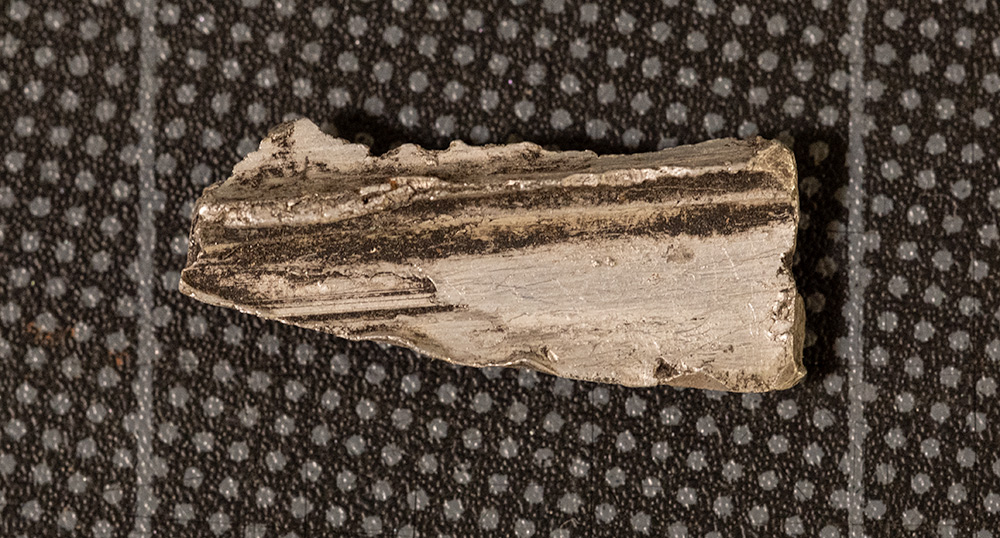
Also one of the ground crew going over the aircraft told me that the bottom of the fuselage was wet with seawater. Hmmm, I guess we got really low. Or maybe we just accumulated a lot of spray from the ever present white caps.
Obviously the personnel in the tower were incompetent and had been showing signs of this for awhile. Not long before I had been practicing radar controlled approaches in clear weather when the operator instructed me to turn right 90 degrees. I had to try hard to keep from laughing because the largest mountain on the island was directly to my right. I replied “negative on the right turn. There is a mountain in the way”. Again he gave me the right turn instruction. OK, this guy sounded like a noob so I requested he bring his supervisor online. A serious sounding voice came on immediately and it got sorted out pronto. In and of itself this was not alarming, but when a pilot declares an emergency, then it’s time for all hands on deck to perform with complete professionalism. That did not happen.
**= When there were firing range activities an S-2 would be sent out to clear unauthorized craft out of the area. Generally it was just letting the local subsistence fishermen know they needed to vacate for awhile. They alway complied very nicely and it was not a problem. Sure, there were notices to mariners and pilots that specified when and where the areas were closed but these are not the kind of people with resources to gather that kind of info. It generally worked pretty well. Now the disguised Russian trawlers that shadowed the fleet were a different type of issue which I did not get involved in. They stayed out of territorial waters anyway. They were always around for our big simulated warfare operations that went on in the Atlantic. Russian submarines were undoubtedly around as well but they kept out of sight.